
Skin & hair
Skin Health and Your Face: What Actually Changes How Old You Look
One habit has a 4.5-year randomized trial behind it. Most of the rest of the skincare aisle does not.
Strong evidence
Face analysis · glow-up plan · graded science
Answer a few questions, take two photos, and see what is working for you, what is holding you back, and the changes worth making first — built on what the research actually shows about how health and habits shape a face.
The quiz and the scan come first. You see the price before you pay anything.
Evidence-graded
Every claim we make carries its strength: strong, moderate, emerging or weak.
Personal to your face
Your answers and your photos decide the order of your plan, not a generic checklist.
No surgery first
The biggest changes most people can make are habits, skin, body and presentation.

Why it matters
Decades of research say the same uncomfortable thing: people agree about faces, judge them in an instant, and treat them differently. The good news is in the same literature — a lot of what they are judging is under your control.
11
meta-analyses in one landmark review found that people strongly agree on who is attractive — within cultures, across cultures and across ethnicities. Beauty is not only in the eye of the beholder.
Source: Langlois JH et al., 2000
Read the full breakdown →40 ms
is how quickly people form impressions from a face — and different photos of the same person can vary more in rated attractiveness than different people do. Lighting, angle, expression and grooming matter far more than most people believe.
Sources: Jenkins R et al., 2011; Todorov A, Porter JM, 2014
Read the full breakdown →5–10%
is the pay penalty economists found for plain looks compared with average-looking people. In hiring experiments, professionals were as swayed by looks as students.
Sources: Hamermesh DS, Biddle JE, 1994; Hosoda M et al., 2003
Read the full breakdown →24%
less visible skin aging in adults who used sunscreen every day, in a randomized trial of 903 people over four and a half years — the only long-term trial of its kind.
Source: Hughes MCB et al., 2013
Read the full breakdown →~8 kg
of fat loss is roughly where studies found a man’s face starts to look more attractive to other people. A leaner-looking face is also rated as healthier.
Sources: Re DE, Rule NO, 2016; Coetzee V, Perrett DI, Stephen ID, 2009
Read the full breakdown →~2×
In a speed-dating study, each step toward a more open, expansive posture nearly doubled the odds of a yes — and expansive photos were chosen more on a dating app.
Source: Vacharkulksemsuk T et al., 2016
Read the full breakdown →Every figure links to the study it comes from, and carries the strength of the evidence behind it. We never round a weak finding up. How we grade evidence
The difference
Most glow-ups fail for the same reason: they start with someone else’s advice and no way to tell what is working.
Copy random tips
Whatever the algorithm served this week, built for somebody else’s face.
Fixate on one feature
Usually the one that is hardest to change, while the easy wins sit ignored.
No baseline
No starting point, so no way to tell whether anything moved.
Quit
Effort with no visible progress is the fastest way to give up.
Set your baseline
A short quiz and two photos give you a starting point you can come back to.
Find what moves you
See what is working for you and which factors are holding you back the most.
Work in order of impact
A plan that puts the changes most likely to matter for you first.
Track it
Retake the photos the same way and compare like with like, not a good selfie with a bad one.
What the scan reads
Your face, your skin and hair, and the parts of your look that are not your face at all. The report covers exactly these — nothing more is claimed.
Some of these you can change this month and some you cannot change at all. The report tells you which is which. What happens in the scan
What you get
Not a single number. A breakdown of what you are working with and what to do about it, in order.
Your scores now, and your potential
Where you stand today on the factors the scan reads, and how much room each one has.
What is holding you back
The factors pulling your result down, and the strengths worth building around.
A plan ordered by impact
The routines, habits and changes that matter most for you, first — not the ones that trend.
The science, graded
Our library explains what the research shows for each habit, and how strong that evidence is, so you can check anything you are asked to do. Read the science
How it works
From your first answer to your plan, in one sitting.
1
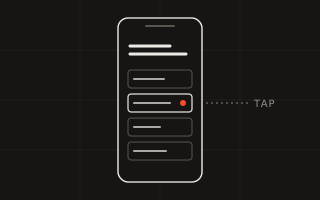
Your goals, your routine, your skin, hair, body and style, and how you feel walking into a room. Tap answers only — nothing to type.
2
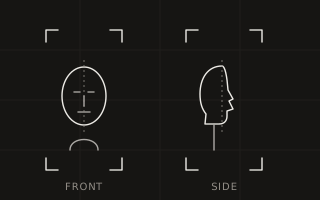
One front, one side, in even light. You see exactly what you are agreeing to before the camera opens, and you can skip the scan entirely.
3
Your scores, what is working for you, what is holding you back, and a plan ordered by the priorities you chose.
Your photos are read once, in memory, to produce the numbers, and are never stored. What happens to your photo
Start my face analysisHealth shapes your face
Sun, sleep, body fat, training, skin, hair and the trends everyone argues about — each one graded by how strong the evidence really is.
Skin & hair
One habit has a 4.5-year randomized trial behind it. Most of the rest of the skincare aisle does not.
Face structure
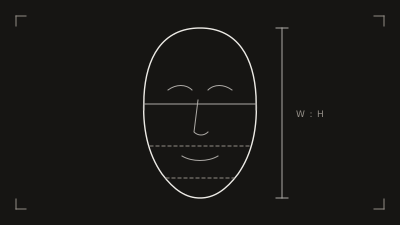
Your jawline may already be there. The research says how much fat loss it takes before other people notice, and it is less than you might think.
Face structure
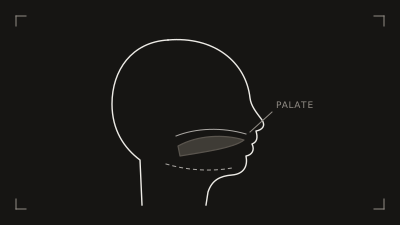
Mewing promises a new jawline from a resting tongue, and the evidence for that is close to nothing, but the idea sits right next to one that genuinely works.
Body & habits
Sleep changes how your face reads to strangers, though less dramatically than the internet claims, and its biggest effect on your looks may run through your appetite.
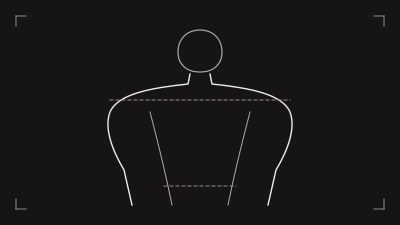
Body & habits
How strong you look drives how your body is rated more than almost anything else measured, and the benefits of lifting run well past the mirror.
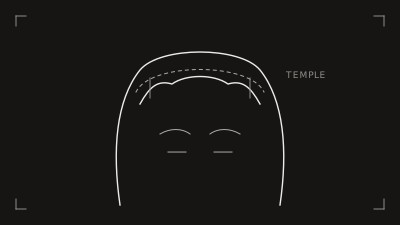
Skin & hair
Two treatments have large trials behind them, one of them comes with side effects you need to hear about first, and the rest of the list is thinner than its marketing.
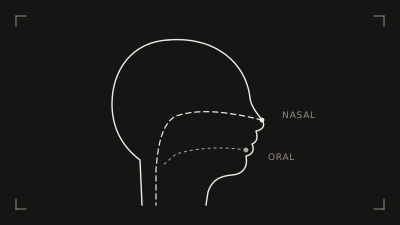
Face structure
The link between breathing and face shape is one of the most repeated ideas in looksmaxxing, and the honest version is narrower, and more useful, than the one you have heard.
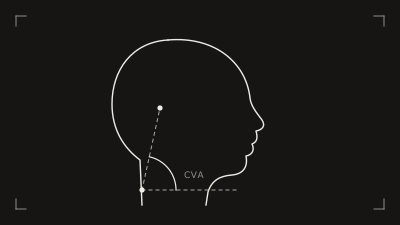
Body & habits
Posture is one of the few things about how you look that trials show you can measurably change, and an open posture changes how people respond to you.
Our stance
You get a plan, not a verdict
The report is built to tell you what to work on, not to hand you a number and leave.
Your strengths come first
The report shows what is already working for you, because building on a strength is the fastest win there is.
Action beats rumination
In randomized trials, resistance training reliably improved mood, and exercise improved how people felt about their bodies before their bodies changed.
Looks shape how you are treated
Economists found a 5–10% pay penalty for plain looks. Wanting to stop paying it is not vanity.
The levers are healthy habits
Sun protection, sleep, training, leaner body composition, skin and grooming. The best-evidenced glow-up looks a lot like taking care of yourself.
Presentation is a skill
The same face can read very differently from one photo to the next. Learning to show yours well is like learning to dress well.
Sources: Gordon BR et al., 2018; Campbell A, Hausenblas HA, 2009; Hamermesh DS, Biddle JE, 1994; Jenkins R et al., 2011; American Association of Orthodontists
FAQ
If yours is not here, write to us — the address is at the bottom of every page.
A face analysis and a self-improvement plan. You answer a short quiz, take two photos, and get a report on the factors that shape how your face reads — skin, hair, structure, body and style — with a plan ordered by impact and the research behind it.
Your scores are an AI estimate from two photos, not a measurement and not a judgment of your worth. Lighting, angle and expression change how any face reads — research finds photos of the same person can vary more in rated attractiveness than different people do — so take both photos in even light, straight on, with a relaxed expression. Treat the numbers as a baseline to track, not a verdict.
Why photos of the same face vary so muchThe numbers for 365 days, then they are deleted automatically. The photos themselves are never stored at all — they exist in your browser tab and in one request, and nowhere else.
Everything that happens to your photoAnswering the questions and taking the scan cost nothing. The full report and plan are a paid subscription, and you see the price and the renewal terms on screen before you pay.
You can cancel at any time, and cancelling stops future renewals. Refunds follow the refund policy, which sets out the guarantee, its condition and how to claim.
Read the refund policyNo. We write about appearance and about what studies found. Nothing here diagnoses or treats any condition, and if something you read sounds like you — loud snoring, hair loss, persistent acne — the right next step is a doctor.
Read the disclaimerNot the way the internet says. There is no controlled study showing mewing changes an adult jaw or face, and the American Association of Orthodontists warns against it. What does have trial evidence is training the tongue and throat muscles — for snoring and sleep, not bone.
The full evidence on mewingNo. We do not recommend procedures. The plan covers what you can change yourself — habits, skin, hair, body and presentation — and for anything medical, it tells you to see a professional.
A short quiz, two photos, and a plan built on graded evidence.
Start my face analysisRead the refund policy